

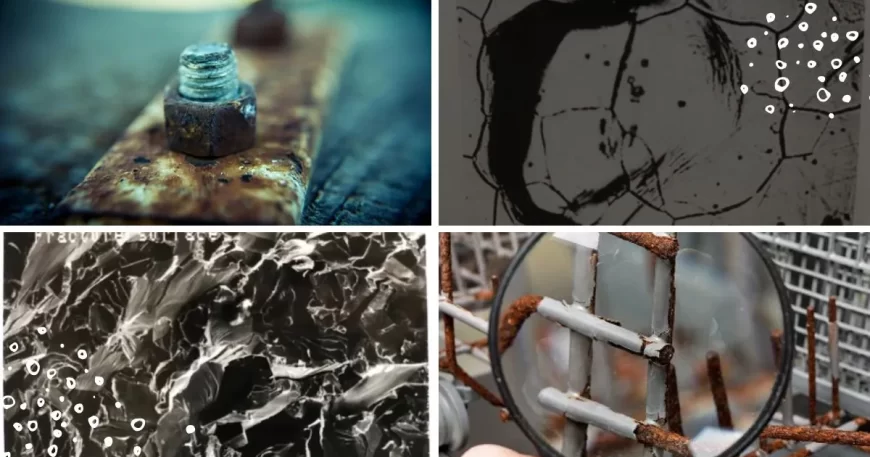
Impact of Hydrogen Absorption and Diffusion in Metals
Hydrogen absorption and diffusion in metals is a critical issue that can significantly compromise structural integrity, performance, and safety. Although hydrogen is the smallest and lightest element, its interaction with metals can lead to severe mechanical degradation, including brittle fracture and premature failure. These effects are especially concerning in high-performance and load-bearing applications where reliability is essential.
At Corrosion Testing and Solutions LLC (CT&S), we evaluate the susceptibility of metal alloys to hydrogen absorption and damage through advanced electrochemical and corrosion testing methods.
How Hydrogen Enters Metals
Metals can absorb hydrogen at multiple stages of their lifecycle. Common sources of hydrogen exposure include:
- Corrosion processes, particularly in aqueous or humid environments
- Welding operations, where hydrogen is introduced through consumables or moisture
- Manufacturing processes such as forming, coating, electroplating, and acid cleaning
- Surface treatments and finishing, where hydrogen evolution reactions may occur
Once introduced, hydrogen atoms readily diffuse into the metal lattice due to their small atomic size.
Hydrogen Absorption and Lattice Damage
When hydrogen enters a metal, it can cause significant changes at the atomic level. Absorbed hydrogen interacts with the crystal lattice, leading to:
- Lattice defects and distortions
- Loss of ductility and toughness
- Increased susceptibility to cracking
- Premature mechanical failure
These effects often develop internally and may not be visible through surface inspection, making hydrogen-related damage difficult to detect without specialized testing.
Role of Hydrogen Diffusion
Hydrogen diffusion plays a critical role in damage evolution. Atomic hydrogen can migrate through the metal lattice and concentrate in regions of high stress, such as:
- Grain boundaries
- Dislocations
- Inclusions and voids
- Notches and welded joints
The severity of hydrogen damage depends on two key factors:
- Hydrogen diffusivity rate – how quickly hydrogen moves through the metal
- Density of hydrogen traps – microstructural features that capture and retain hydrogen
Metals with high diffusivity and numerous trapping sites are especially vulnerable to hydrogen-induced degradation.
Crack Initiation and Propagation
As hydrogen accumulates at lattice defects, it can recombine to form molecular hydrogen gas. This process creates internal pressure within the metal. Over time, the buildup of pressure can initiate microcracks at defect sites.
Once cracks form, hydrogen continues to diffuse to the crack tip, accelerating crack growth. This process can drive crack propagation under relatively low applied stresses, ultimately leading to sudden and brittle failure.
Industrial Impact and Risk
Hydrogen absorption and diffusion present serious risks across industries such as:
- Oil and gas
- Aerospace
- Automotive
- Infrastructure and construction
- Marine and energy systems
Failures associated with hydrogen damage can result in equipment downtime, safety hazards, costly repairs, and reduced service life of critical components.
Testing and Evaluation at CT&S
Corrosion Testing and Solutions LLC provides specialized electrochemical testing to assess both corrosion susceptibility and hydrogen-related damage mechanisms in metal alloys. Our testing services help identify:
- Tendency for hydrogen absorption
- Diffusion behavior under service conditions
- Risk of hydrogen-induced cracking and failure
By understanding how materials interact with hydrogen, engineers and manufacturers can make informed decisions regarding material selection, processing methods, and protective strategies.