Service Areas

Corrosion testing and solutions

Metals exposed to mild or aggressive corroding environments will degrade and can experience catastrophic failure under some conditions. Corrosion deteriorates not only the metal surface but it can also weaken its structural integrity, posing economic and safety risks. It can be mitigated through proper material selection, using inhibitors, applying protective coatings, or by using a cathodic protection technique.

At Corrosion Testing and Solutions LLC (CT&S), we do corrosion testing of metal alloys relevant to your unique environment. The rate and type of corrosion is impacted by the corroding media conditions, the alloy properties, its metallurgical conditions, and the alloy composition. Understanding the metal’s corrosion behavior in a corrosive media allows determining the metal compatibility with such media.

Our team has academic and industrial experience on corrosion testing and corrosion evaluation that can benefit your business.

Corrosion testing is necessary to understand your metal’s corrosion response to its environment. Our team executes fast electrochemical corrosion testing and also extended chemical corrosion testing using international standards. The electrochemical corrosion test method determines the corrosion behavior of metal alloys in real time, as it happens. The corresponding corrosion test data can be used to select the appropriate metal alloy to suppress corrosion in a given corroding environment or process condition. Read More about Corrosion Testing and See our SERVICES page.

At CT&S we can help your business address corrosion issues. Testing of your materials is done at conditions simulating your process parameters. We can also help you select the best corrosion resistance materials for your working environment. READ MORE ABOUT CT&S

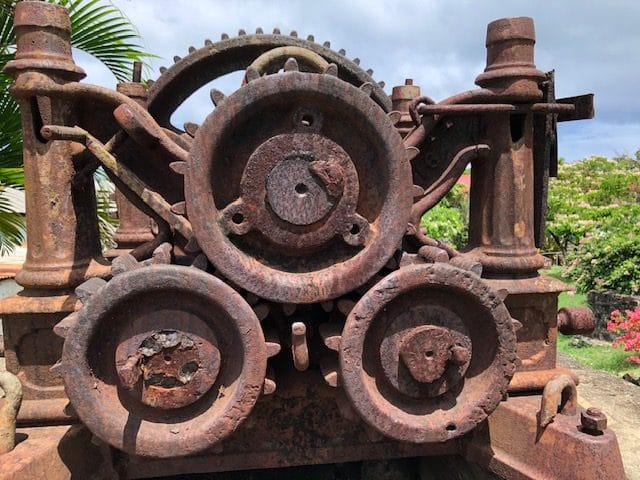
Uniform corrosion of cast iron exposed to a seawater atmosphere containing about 3.5% sodium chloride, NaCl. This alloy can corrode at a high rate of 45 µm/year in such corrosive media.

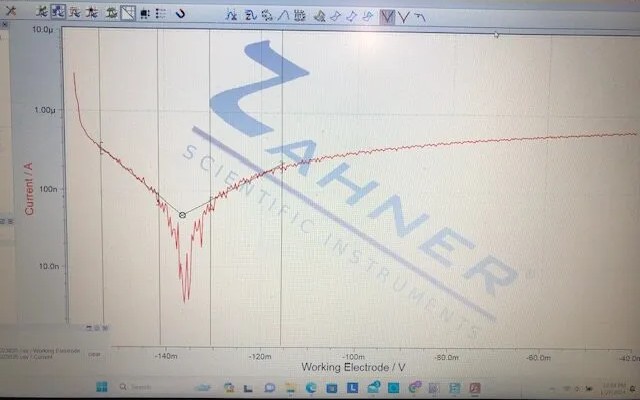
Tafel polarization graph used to determine the rate of uniform corrosion of 304 stainless steel, corroding at 0.311 µm/year in a solution of 3.5% NaCl. In seawater, this alloy can develop pits at much higher corrosion rates.