Request A Quote
Expert Analysis of Intergranular Corrosion in Stainless Steel and Alloys
Intergranular Corrosion Testing and Solutions
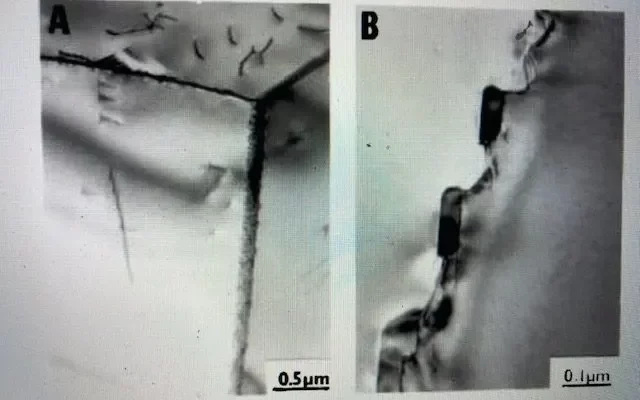
Intergranular corrosion in stainless steel is a result of chromium carbide precipitation at grain boundaries leaving adjacent sites depleted of chromium which become prone to corrosion. Stainless steels become susceptible to carbide precipitation when exposed to temperatures between 425 and 870 ºC, such as during improper welding or heat treatment. This phenomena, called sensitization, can lead to stress corrosion cracking in marine environments. The sensitized alloy exhibits chromium-rich precipitates at grain boundaries and chromium-depleted zones at sites adjacent to the grain boundaries. These sensitized zones become prone to corrosion attack because of insufficiency of chromium. Minimizing holding temperatures between 425 and 870 ºC will suppress failures. Also sensitized welded zones can be heat treated to de-sensitize the weld. Alloys not sensitive to intergranular corrosion are low-carbon stainless steels and stabilized stainless steels added with titanium or niobium which have stronger affinity to carbon than chromium.
The intergranular corrosion susceptibility and the degree of sensitization (DOS) of stainless steels can be quantified by an electrochemical reactivation test (EPR) or by a double-loop electrochemical potentiokinetic reactivation acid test (DL-EPR). Testing can also be done by sample immersion for several hours in boiling acid solutions according to ASTM A262 or ASTM G28 for wrought nickel-rich chromium-bearing alloys. Duplex stainless steels composed of ferrite and austenite phases exhibit high resistance to pitting, crevice corrosion, and stress corrosion cracking, provided that there is absence of grain boundary chromium carbide precipitates.